
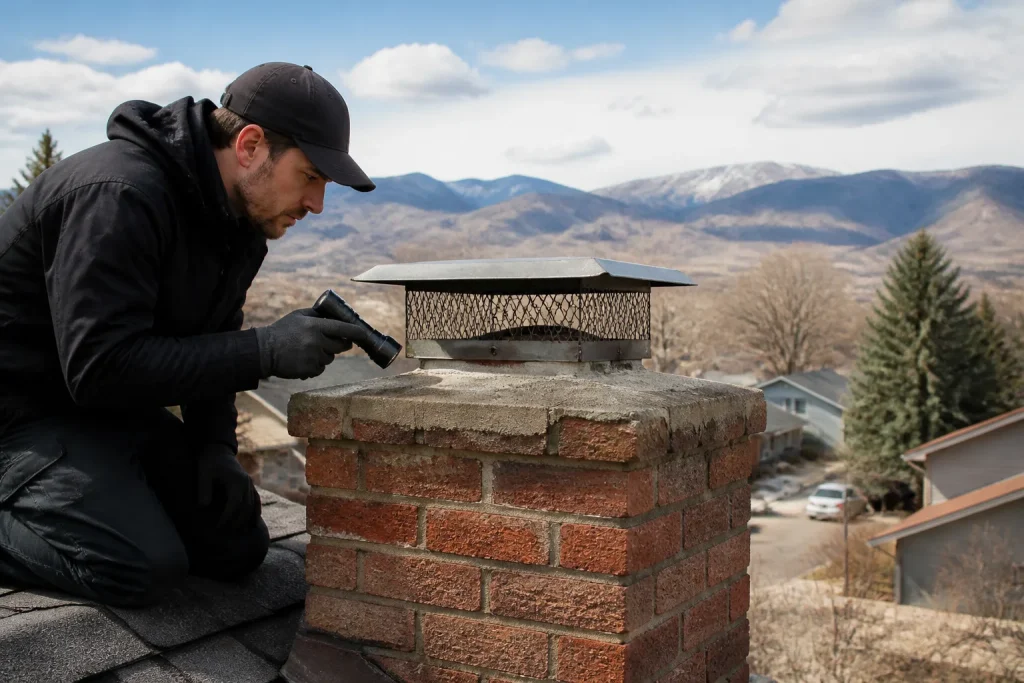
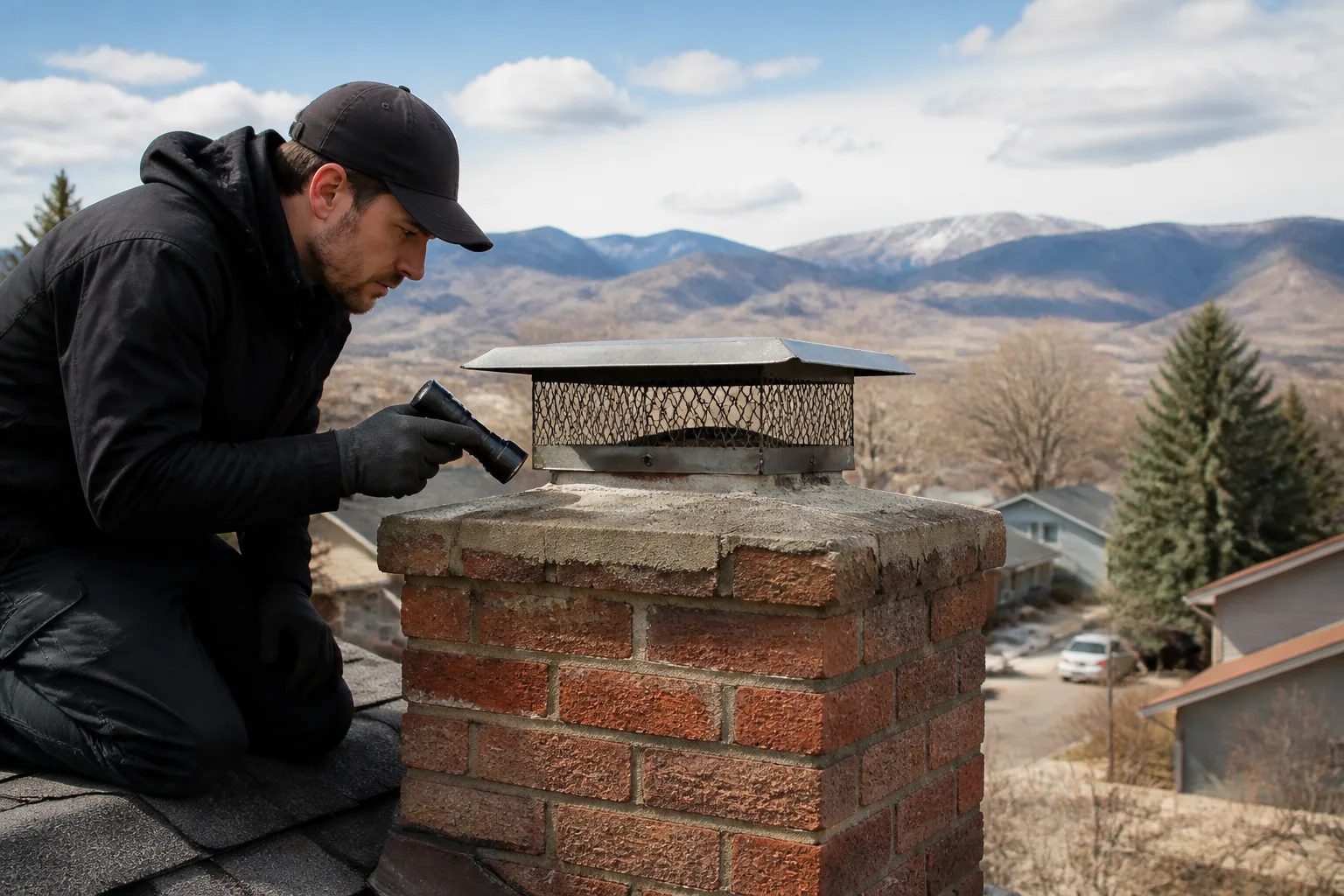
Emergency Chimney Sweep Near Me: What Lakewood Homeowners Should Do First
Most people who search for an emergency chimney sweep in Lakewood don’t actually have a chimney emergency. They have a scare: a puff of smoke in the living room, a smell they can’t place, or a cap that vanished in a windstorm. A handful of situations are genuine emergencies, and those need 911 before they need a sweep. Everything else can wait a day or two if you handle it right at the outset. This is our triage checklist.
What Counts as a True Chimney Emergency?
A true chimney emergency is an active chimney fire, a strong smell of carbon monoxide in the home, or visible structural collapse of the chimney itself. Anything else is urgent but not an emergency, and you have more time than you think. Before you call anyone, sort your situation into one of these three buckets.
Bucket one – call 911 now:
- You hear a loud roaring, popping, or rumbling from the chimney that doesn’t stop.
- Flames or thick smoke are coming out of the top of the chimney or through cracks in the masonry.
- Your carbon monoxide alarm is sounding, or you smell a strong, sulfurous odor indoors with a gas appliance running.
- Chunks of masonry or liner have fallen into the firebox or onto the roof.
- The chimney or surrounding framing is visibly distorted, cracked, or pulling away from the house.
Bucket two – call a sweep today, but don’t panic:
- Smoke rolling back into the room when you light a fire (smoke rollback).
- Heavy creosote buildup you can see or smell, or a fire that’s struggled for weeks.
- The chimney cap blew off or was damaged after a storm.
- A strong smoky odor in the house during warm months.
Bucket three – put it on the schedule:
A chimney you haven’t swept in a few seasons and a fire that seems a little sluggish. That’s a routine chimney sweep, not an emergency. Call during normal dispatch hours and get on the books.
Step-by-Step Actions to Take Before Help Arrives
If you smell or see smoke inside the room, get people and pets out first. Actions in the first five minutes matter more than anything else. Here’s what to do, in order.
- 1
Stop using the fireplace immediately. Don’t add more wood, don’t open the door, don’t try to “burn it out.”
- 2
Get everyone outside if smoke or CO is present. Call 911 from outside or in fresh air. Count heads and pets.
- 3
Close the fireplace damper only if the fire is out. An open damper pulls air up and feeds a chimney fire. If the firebox is actively burning, close the glass doors instead.
- 4
Never throw water on a chimney fire. Water on creosote or a hot flue can flash into steam and shatter the liner, sending shrapnel and fire into the framing. Firefighters use specialized methods; you don’t.
- 5
Because the National Fire Protection Association (NFPA) reports that chimney fires burn at over 2,000°F, treat any event where you heard roaring or popping as a fire until a professional rules it out. A clean-looking firebox does not mean the flue is fine. Liners warp and crack silently at that temperature.
- 6
After the emergency is handled, call a sweep for an inspection. Not before. If there’s an active fire, the fire department owns the scene until they say otherwise.
If you’d rather not navigate this on your own, call (877) 792-6835. We answer 24/7. Fast dispatch from 7am to 7pm, Sunday through Friday.
Why Lakewood’s High-Altitude Burn Conditions Make Creosote Worse
Wood burns differently at 5,600 feet than it does at sea level, and it catches up with you in the flue. Lakewood’s dry, high-altitude air produces a hotter, flashier fire with more complete combustion when the wood is properly seasoned – but the same conditions starve a fire when the wood is damp or the air control is wrong. The result is faster creosote staging than most lower-elevation chimney guidelines assume.
What we see in Lakewood, on the west side near Green Mountain and along the edges of Belmar, looks like this: a fire that seems to burn cleaner right up until it doesn’t, and a flue that glazes over sooner than the homeowner expected. That glazed, third-stage creosote is the fuel behind chimney fires, and it doesn’t sweep away with a brush. It needs a professional evaluation, and sometimes more.
Two climate details worth knowing in Lakewood specifically:
- Dry winters split wood faster and drive off moisture in stored cordwood – which is good, until late-season snow sits on the pile and re-wets the outer layer. Seasoned outside, wet on the surface, is the worst combination.
- Frequent temperature swings in the Front Range push heat up and cold down the flue in short cycles, and each cycle lays down another layer of condensate on cool liner walls. That’s why late-fall buildup can be thicker than homeowners expect.
None of this is a reason to panic. It’s a reason to sweep before the season starts rather than in the middle of it.
What a Legitimate Sweep Should Ask You Before Showing Up
A real chimney professional triages on the phone. That’s the easiest test you can apply. If a company won’t ask you specific questions before dispatching someone, put the phone down. A fair first call sounds like a short interview:
- “Is there an active fire right now, or smoke inside the house?” If yes, they tell you to call 911 first, not a sweep.
- “What exactly are you seeing or smelling?” Smoke rollback, CO smell, soot stains, and a missing cap each point to a different response.
- “When was the chimney last swept, and what type of appliance is on it?” Wood, gas, and pellet all require different handling.
- “What’s your carbon monoxide situation?” A working CO alarm, batteries changed, no recent headaches or dizziness. If CO is suspected, that’s the fire department’s call, not ours.
- “Is the chimney on an exterior wall or interior?” Exterior chimneys run colder and build creosote differently.
Red flags to watch for:
- No triage questions at all – “we’ll be there in an hour, we’ll figure it out.”
- A firm quote given over the phone, sight unseen. Prices belong in a written estimate after we inspect.
- Any suggestion that every chimney needs a full liner replacement before anyone has looked inside.
- No explanation of what a Level 2 inspection is, or why one matters.
We inspect first, then recommend – and we put the findings in writing. Our technicians have up to 11 years of experience, and the local pros we connect you with are licensed and insured as their state requires.
Post-Emergency Documentation: The Level 2 Inspection Rule
After any chimney fire – even one that self-extinguished and even one the fire department handled without incident – you need a Level 2 inspection before the fireplace is used again. That’s the standard established by NFPA 211, the national code for chimneys, fireplaces, vents, and solid fuel appliances. It isn’t paperwork; it’s how a trained technician finds hidden damage you can’t see from the living room.
A Level 2 inspection includes a video scan of the flue. The camera looks at every joint and offset, and it captures the kind of hairline crack or warped liner segment that only shows up when a flue heats past its rating. Because a 2,000°F event can distort a steel liner in a matter of minutes, a clean-looking firebox is not evidence of anything.
What typically comes out of a post-fire Level 2:
- Liner evaluation. If the flue liner is damaged but structurally sound, HeatShield resurfacing is often the less invasive path – it restores the flue from the inside rather than tearing the chimney apart, in qualifying chimneys. If a full liner is needed, DuraFlex flexible systems handle offset and non-standard flue configurations that rigid pipe can’t reach.
- Cap and crown review. Water intrusion through a failed crown or missing cap is the slow-burn problem behind a lot of “sudden” masonry damage. Famco and Olympia Chimney cap products are the kind of trade-grade we install, and a proper crown repair is worth doing at the same time.
- Written report with photos. You should see what the technician sees, not just take our word.
If it needs to be said out loud: if the inspection finds nothing dangerous, we tell you that too. Nothing is recommended here without photographic evidence you can look at yourself, and we say plainly when a repair can safely wait for a better month.
When to Call a Pro vs. When You Can Wait
Here’s the honest split. If your situation lands in the emergency bucket above, call 911. If it lands in the urgent bucket, call a sweep today. If it lands in the routine bucket, schedule in the normal course of things and don’t burn this season on a hope.
The situations where we tell a Lakewood homeowner to call without delay:
- Any smell of flue gas or carbon monoxide inside the house.
- A loud event from the flue that felt like a fire even if it put itself out.
- Visible structural damage, a leaning chimney, or masonry dust in the firebox.
- Storm damage to the cap, crown, or the top few courses of brick.
- Smoke rollback that’s getting worse rather than better.
We’ve seen enough Lakewood homes to know most of these are not the disaster they feel like at the moment. But a chimney fire that damaged a liner and gets forgotten is a slow-motion problem with a serious ending. Get it looked at once. Then get on an annual schedule and stop thinking about it.
Related services in Lakewood
For the full scope of what we handle under one roof – sweep, inspection, fireplace repair, and chimney cap & crown installation – start with the inspection and let the findings set the plan. One crew, one invoice, and a written report before anything is recommended.
The Bottom Line
A true chimney emergency – active chimney fire, suspected carbon monoxide, or structural failure – is a 911 call first and a sweep second. Everything else can be handled with calm and a scheduled inspection. Because Lakewood’s high-altitude, dry conditions build creosote faster than lower-elevation guidelines assume, get on the books before burning season starts, not in the middle of it. After any fire event, a Level 2 inspection per NFPA 211 is the standard before you light another fire, and the report should be in your hands, with photos, so you can see what we see.
If you’re in Lakewood and need help, Chimney Sweep Lakewood Pros offers free estimates – call (877) 792-6835. We answer 24/7. Fast dispatch from 7am to 7pm, Sunday through Friday.
Frequently Asked Questions
Get everyone out of the house and call 911. Don’t add water to the firebox, don’t try to fight a chimney fire yourself, and don’t use the fireplace again until a Level 2 inspection confirms the flue is intact. Call (877) 792-6835 for an inspection after the fire department clears the scene – estimates are free.
If there’s an active fire, a carbon monoxide alarm, or visible structural damage, it’s an emergency and you call 911. If you’re seeing smoke rollback, heavy creosote, or a missing cap after a storm, that’s urgent but not an emergency, and a sweep can be scheduled today. Call (877) 792-6835 and we’ll help you sort it in the first two minutes.
Yes. NFPA 211 calls for a Level 2 inspection before the fireplace is used again after any chimney fire, because a 2,000°F event can crack a liner in ways you can’t see. The video scan shows you the damage before anyone recommends a repair. Call (877) 792-6835 to book one – estimates are free.
Higher elevation, dry air, and short heat-and-cold cycles in the Front Range accelerate creosote staging on cool flue walls. Seasoned wood helps, but the biggest factor is scheduling an annual sweep before the season starts. Call (877) 792-6835 to get on the schedule ahead of burning season – estimates are free.
Written by the team at Chimney Sweep Lakewood Pros.
Need Chimney Cleaning Help?
Call Chimney Sweep Lakewood Pros - the local pro we connect you with is licensed and insured, here with fast help in Lakewood.
(877) 792-6835